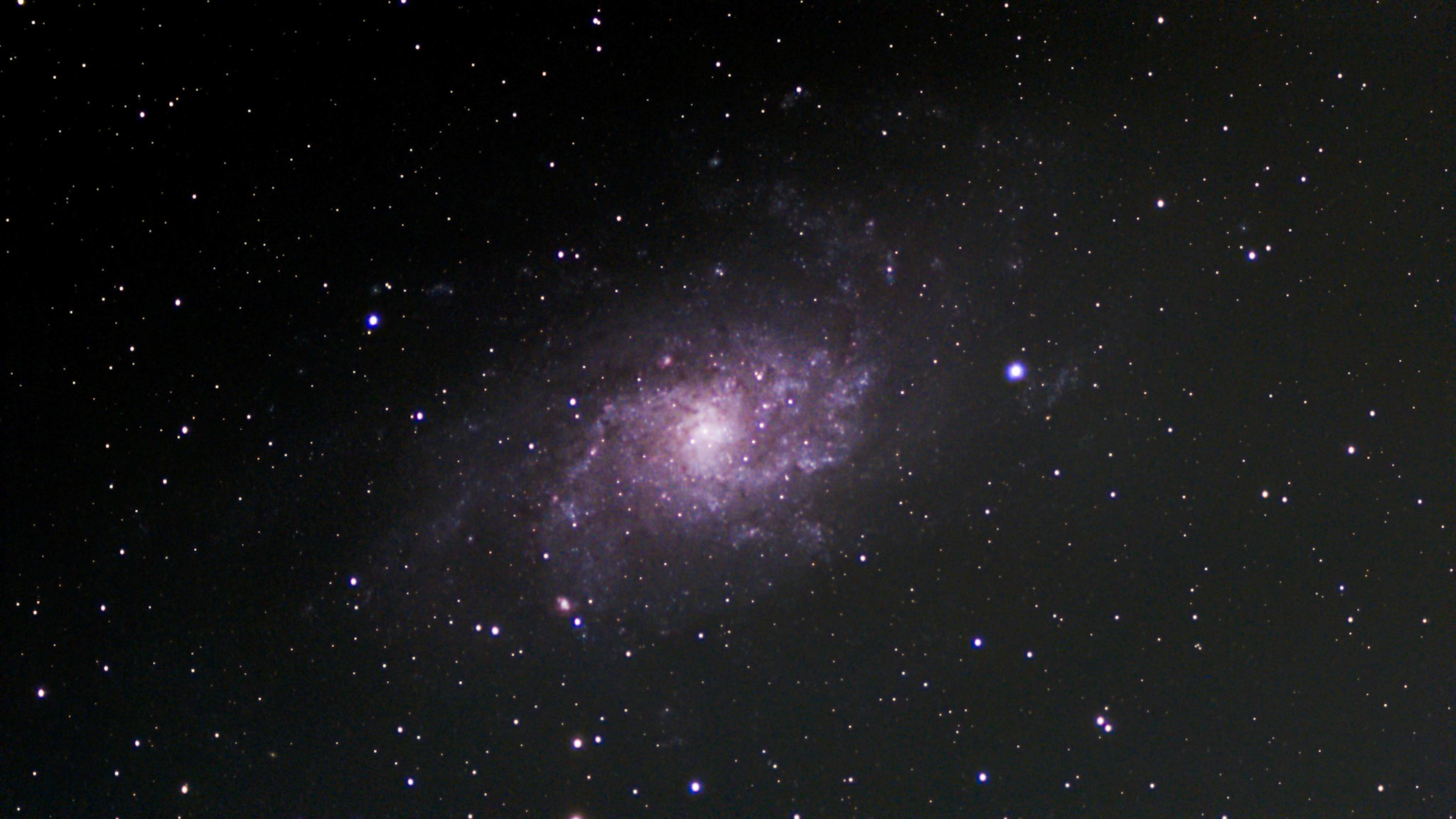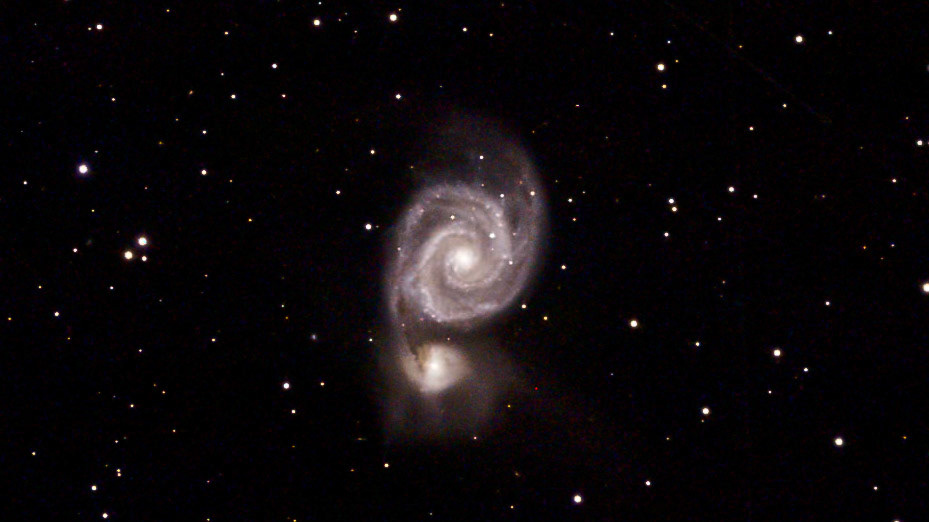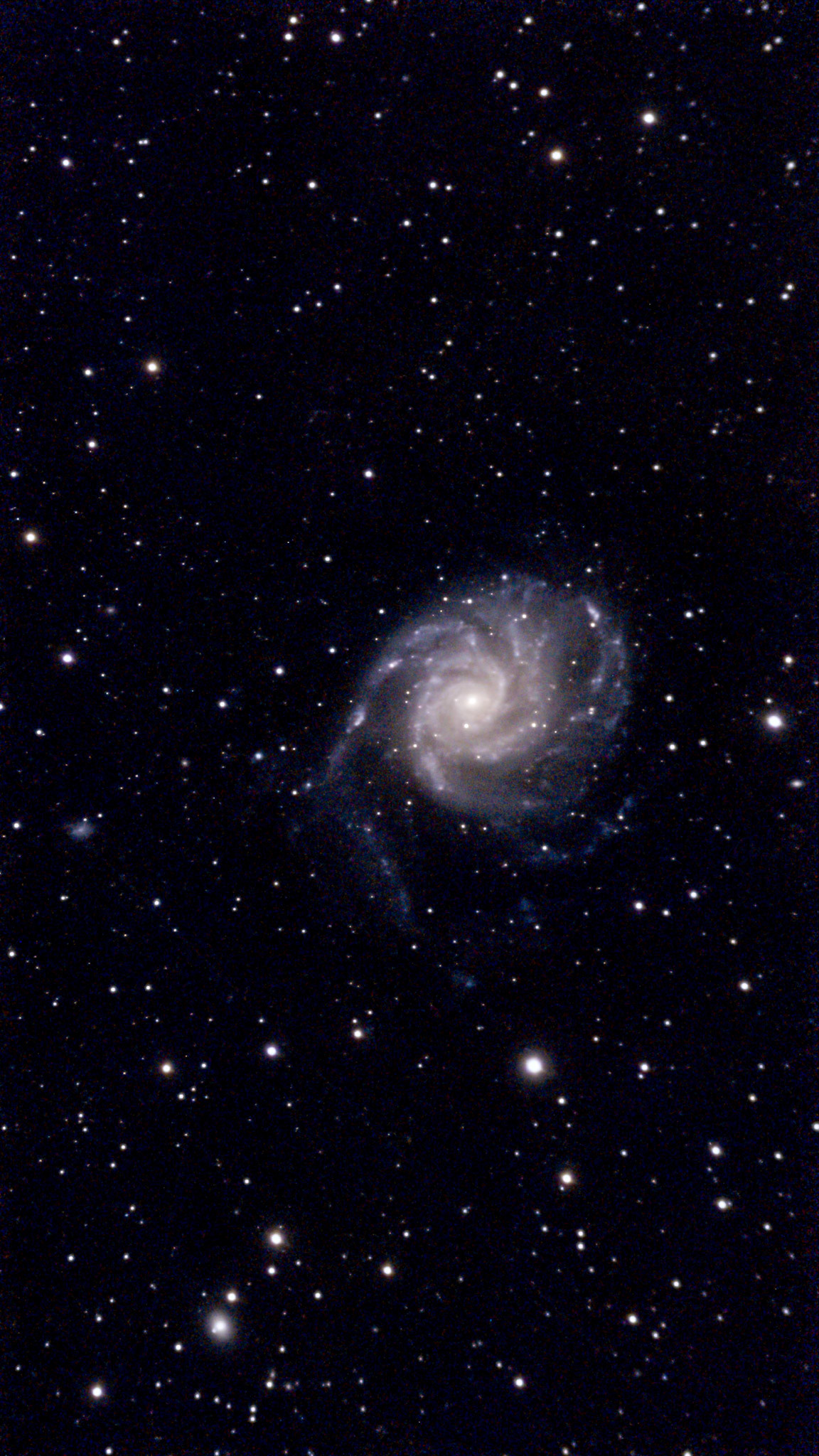
M101 — La galaxie du Moulinet M101, la galaxie du Moulinet, se trouve dans la constellation de la Grande Ourse, cette figure céleste que l’on retrouve dans de nombreuses mythologies depuis l’Antiquité. Dans le ciel, l’ourse guide le regard ; dans l’image, elle révèle une spirale immense, presque fragile, suspendue à des millions d’années-lumière. M101 est une galaxie spirale vue presque de face. Cette orientation permet de distinguer ses bras étendus, chargés de gaz, de poussières et de régions où naissent de nouvelles étoiles. Sa structure n’est pas parfaitement régulière : elle semble légèrement déformée, probablement sous l’effet d’interactions gravitationnelles avec des galaxies voisines. Même à cette distance, on devine que l’Univers n’est pas figé, mais en mouvement permanent. La lumière enregistrée ici a voyagé environ 21 millions d’années avant d’atteindre mon capteur. Photographier M101, c’est donc capturer une trace du passé, une image fossile venue d’une époque où l’humanité n’existait pas encore. Il y a quelque chose de vertigineux dans cette idée : quelques photons anciens, partis d’une île de centaines de milliards d’étoiles, terminent leur course dans un petit instrument installé sous notre ciel. M101 — The Pinwheel Galaxy M101, the Pinwheel Galaxy, lies in the constellation of Ursa Major, the Great Bear — a celestial figure that has appeared in myths and sky lore since antiquity. In the night sky, the Bear guides the eye; in this image, it reveals an immense, almost delicate spiral suspended millions of light-years away. M101 is a spiral galaxy seen almost face-on. This orientation allows us to observe the full sweep of its extended arms, filled with gas, dust, and vast regions where new stars are being born. Its structure is not perfectly symmetrical: the galaxy appears slightly distorted, most likely due to gravitational interactions with neighboring galaxies. Even from such a distance, it reminds us that the Universe is not still, but constantly in motion. The light recorded here travelled for around 21 million years before reaching my sensor. Photographing M101 is therefore like capturing a trace of the distant past — a fossil image from a time long before humanity existed. There is something dizzying about that thought: a handful of ancient photons, born in an island of hundreds of billions of stars, ending their journey in a small instrument under our own sky.