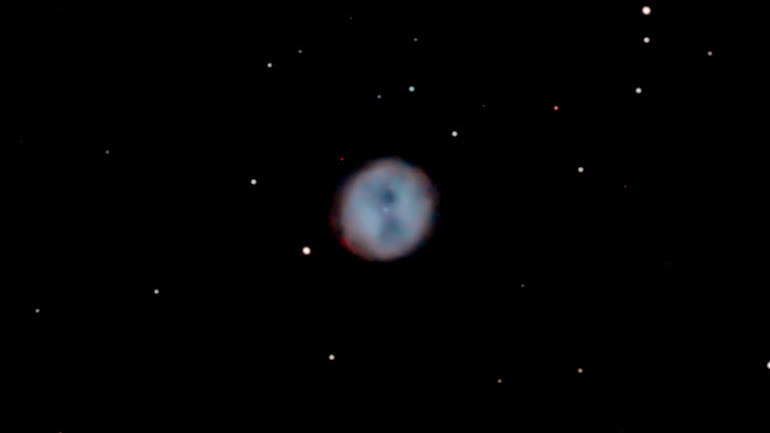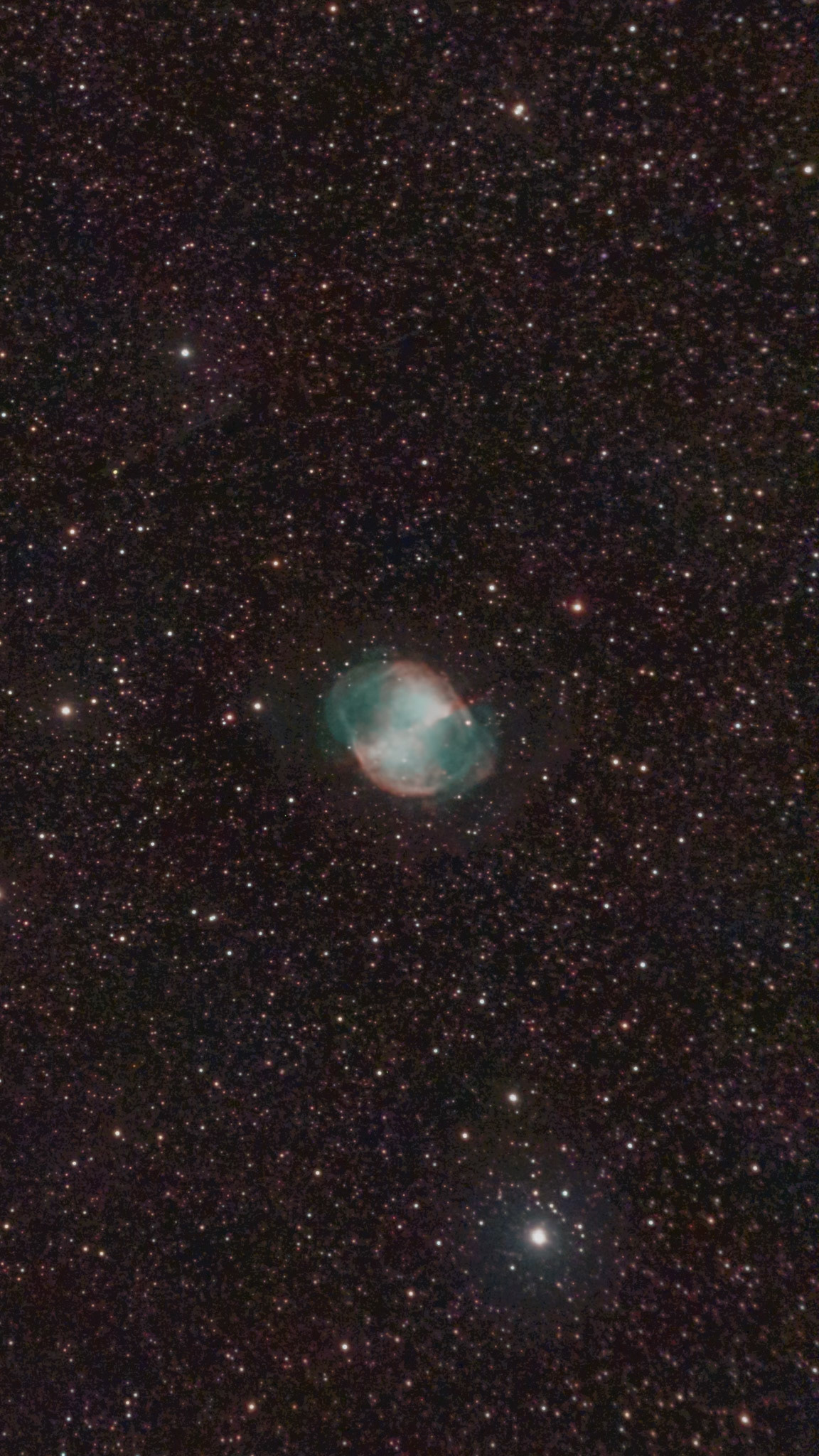
M27 — La nébuleuse de l’Haltère Direction la constellation du Petit Renard, à environ 1 200 années-lumière de la Terre, pour capturer l’un des plus beaux vestiges stellaires du ciel profond : Messier 27, aussi appelée Dumbbell Nebula. Ce que l’on voit ici n’est pas une galaxie, ni un nuage ordinaire. C’est la fin de vie d’une étoile semblable au Soleil. Après avoir épuisé son carburant, l’étoile a expulsé ses couches externes dans l’espace, formant cette bulle de gaz lumineuse. Au centre, il ne reste qu’un cœur extrêmement dense et chaud : une naine blanche, qui ionise le gaz autour d’elle. Les teintes bleu-vert viennent principalement de l’oxygène ionisé, tandis que les zones rougeâtres trahissent la présence d’hydrogène. En clair : ce sont les derniers souffles d’une étoile morte, projetés dans l’espace à des dizaines de kilomètres par seconde. Une image de mort stellaire… mais aussi de renaissance cosmique. Car les éléments expulsés enrichiront un jour d’autres nuages, d’autres étoiles, et peut-être d’autres mondes. M27 — The Dumbbell Nebula | A Stellar Afterlife Captured roughly 1,200 light-years away in the constellation of Vulpecula, Messier 27 (M27) — better known as the Dumbbell Nebula — is one of the most spectacular remnants of stellar evolution visible from Earth. What you’re looking at is not a galaxy, nor a simple cloud of gas. This is the final chapter of a Sun-like star. After exhausting its nuclear fuel, the dying star violently expelled its outer layers into space, creating this glowing cosmic shell known as a planetary nebula. At its center remains an incredibly dense and scorching-hot white dwarf, whose intense ultraviolet radiation energizes the surrounding gas, causing it to shine across the cosmos. The striking blue-green hues come primarily from doubly ionized oxygen (OIII), while the reddish regions reveal glowing hydrogen emissions — the fingerprints of stellar death written across interstellar space. In a poetic twist of cosmic fate, these expelled elements will eventually seed future stars, planets… and perhaps even life itself.