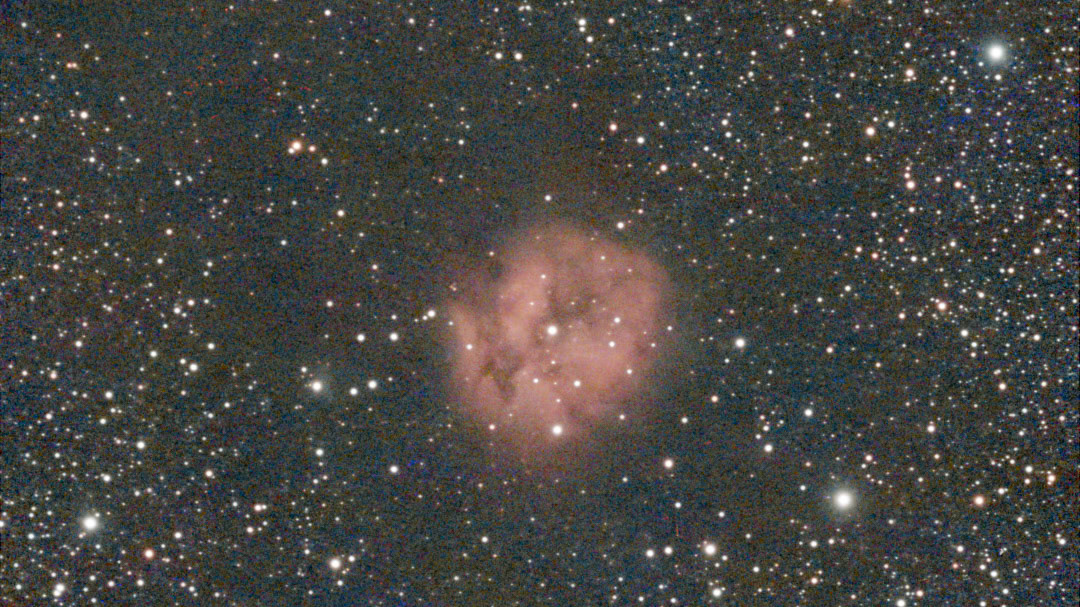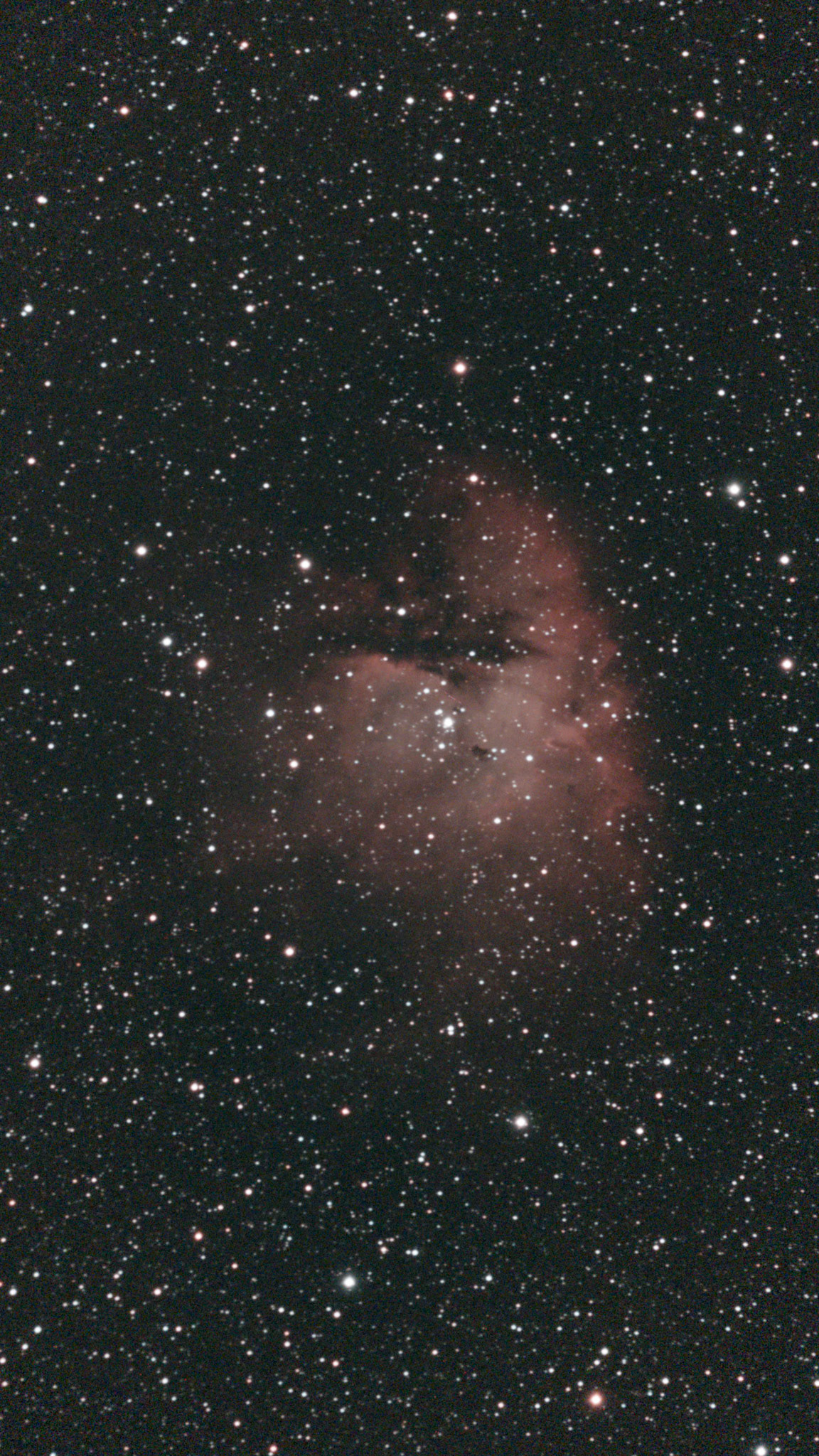
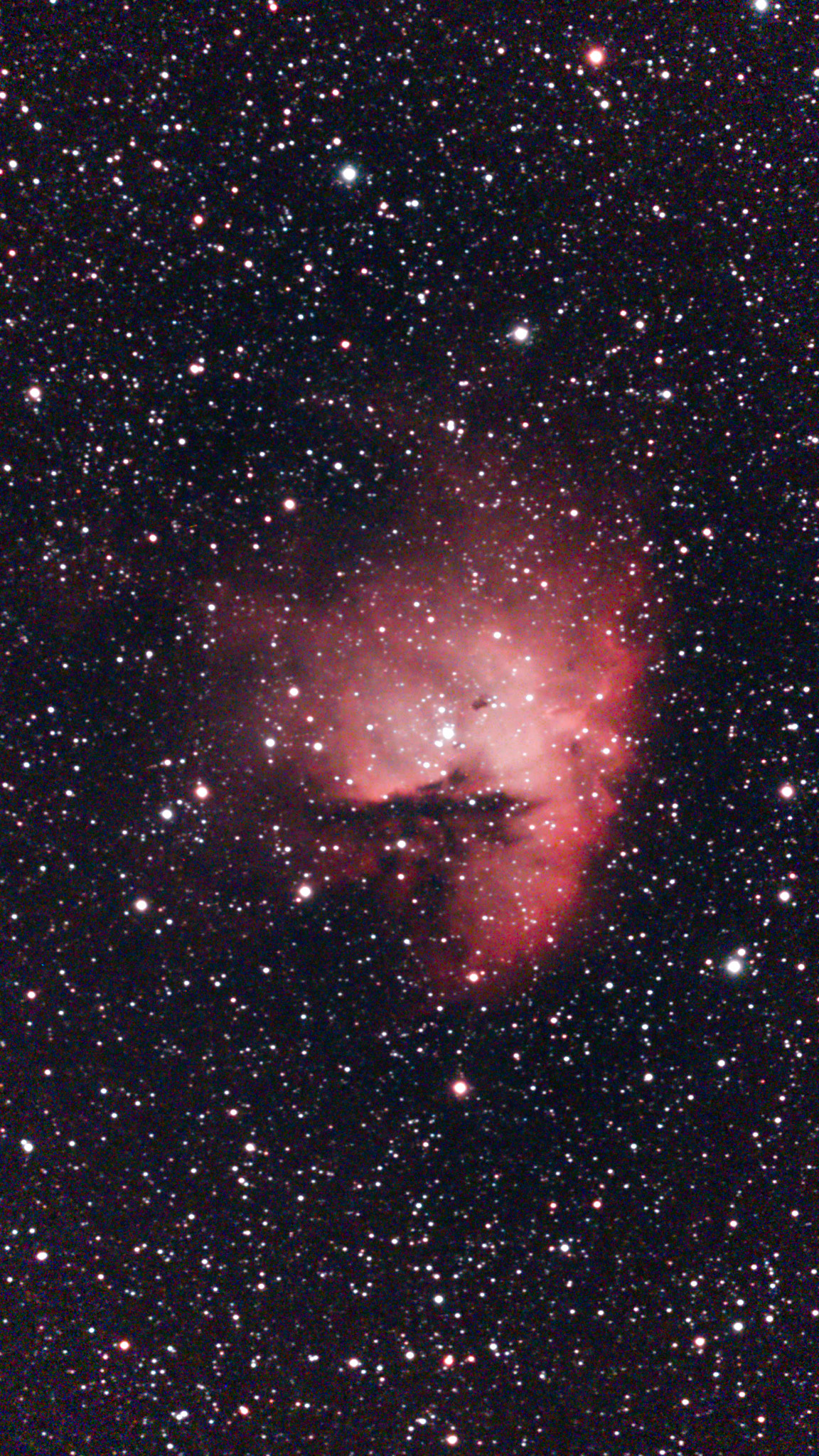
NGC 281, commonly known as the Pacman Nebula, is a large star-forming region located in the constellation Cassiopeia, at a distance of roughly 9,000 to 10,000 light-years. It is an emission nebula, dominated by ionized hydrogen, whose irregular shapes are the result of intense radiation from young massive stars interacting with the surrounding gas. At the core of the nebula lies the open cluster IC 1590, composed of hot O- and B-type stars. Their strong ultraviolet radiation and stellar winds carve cavities into the nebula, compressing nearby gas and triggering further star formation. This process of self-regulated star formation is characteristic of large galactic nurseries. The dark regions visible within NGC 281 are not empty space, but Bok globules—dense, cold clouds of dust and gas that may eventually collapse to form new stars. They represent future stellar generations still hidden from view.